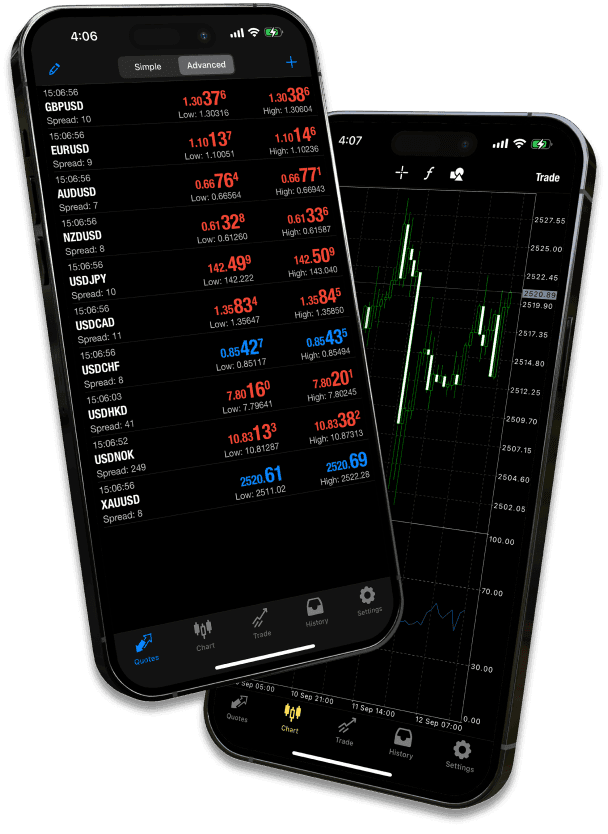
How to Combine Fundamental and Technical Analysis for Smarter Stock Trades banner - mobile view

How to Combine Fundamental and Technical Analysis for Smarter Stock Trades

Stocks
Published on: 05 May, 2026Updated on: 05 May, 2026

Most traders pick a side. They either dig through earnings reports and balance sheets, or they spend their evenings decoding candlestick charts. Very few stop to ask the smarter question — why not both?

The debate around fundamental vs. technical analysis for beginners has gone on for decades. But here's what professionals have quietly understood all along: these two approaches aren't rivals. They're partners. Used together, they answer the two questions every trader needs answered — what to buy, and when to buy it. But before that lets understand what each type of analysis method actually does in stock trading.

What Is Fundamental Analysis in Stock Trading?

Fundamental analysis focuses on evaluating a company’s long-term growth potential. It answers the question: Is this company worth investing in?

Key Factors:

  • Financial health, intrinsic value
  • Revenue and earnings growth
  • Price-to-Earnings (P/E) ratio
  • Industry position and competitive advantage
  • Economic conditions like interest rates and inflation

This approach is especially useful for identifying strong companies that may be undervalued and suitable for long-term investment.

What Is Technical Analysis in Stock Trading?

Technical analysis focuses on price movements and chart patterns to predict future behavior. It answers the question: When is the right time to enter or exit a trade?

Key Tools:

  • Support and resistance levels
  • Moving averages (e.g., 50-day, 200-day)
  • RSI (Relative Strength Index)
  • MACD (Moving Average Convergence Divergence)

This method is widely used for timing trades, especially in short-term or swing trading strategies.

Why the "Either/Or" Approach Costs Traders Money

Between 74% and 89% of retail traders lose money, a figure that has barely moved across nearly three decades of market data. The reasons are consistently the same: emotional decision-making, poor timing, and the absence of a structured, research-backed process.

That's precisely the gap a combined stock trading strategy using fundamental and technical analysis closes. Fundamentals build your conviction. Technicals give you precision. Together, they replace guesswork with a repeatable process.

How to Pick Stocks Using Fundamental and Technical Analysis: A Practical Framework

Step 1 — Screen Fundamentally

Start by filtering for financially healthy businesses. Look for stocks with consistent EPS growth, revenue growth of 10%+ year-over-year, a P/E ratio below the sector average, manageable debt levels, and an ROE above 15%. This is how to analyse stocks before buying for beginners, you narrow thousands of options down to a shortlist of candidates worth your attention.

Step 2 — Understand the Business

Read recent earnings call transcripts. Know the company's growth drivers, competitive position, and any risks on the horizon. A great set of numbers today can mask serious structural problems, and those will eventually surface in the stock price.

Step 3 — Apply the Technical Layer

Now look at the chart. For a strong entry, you want to see the stock in an established uptrend (50-day MA above 200-day MA), pulling back to a known support level, with RSI cooling toward neutral territory (40–55 range). A bounce off support on rising volume is a high-conviction signal that buyers are stepping back in.

This is how to find entry and exit points in stock trading, not by guessing, but by waiting for the chart to confirm what your fundamental research already told you.

Step 4 — Define Your Trade Before You Enter

Before placing a single order, you must know three things: your entry price, your profit target, and your stop-loss. A stop-loss is not optional, it is the most important risk management tool available. The market does not owe you a recovery.

A Quick Real-World Example

Imagine a semiconductor company with five consecutive quarters of EPS growth, 28% year-over-year revenue expansion, and a manageable debt-to-equity ratio of 0.4. The fundamentals are solid. Now check the chart. The stock has pulled back 12% from its 52-week high, bounced twice off a key support level, and RSI has cooled from 73 to 48. The 50-day MA remains above the 200-day MA. Volume nudged higher on the most recent bounce day.

That's your setup. Fundamentals gave you conviction. Technicals gave you timing. You enter with a defined stop below support and a clear profit target, a proper reward-to-risk ratio built in from the start.

This is the best stock analysis strategy for beginners because it removes emotion from both sides of the trade.

Risk Management: The Part Most Beginners Skip

No guide on stock market risk management strategies for beginners is complete without saying this plainly: how you manage risk matters more than how well you pick stocks.

The principles are straightforward. Never allocate more than 5–10% of your portfolio to a single position. Risk no more than 1–2% of your total capital on any one trade. Spread exposure across sectors, owning ten technology stocks is not diversification. And keep a trading journal. Recording your reasoning and outcomes over time reveals patterns in your own decision-making that no indicator can show you.

What is the best strategy for stock trading beginners? It's not a hot tip, a trending ticker, or a single indicator. It's a process, one that combines the depth of fundamental research with the precision of technical timing, wrapped in a disciplined approach to risk.

Fundamentals tell you the story. Technicals tell you when to act on it. Together, they give you the one thing most retail traders never develop: a consistent, evidence-based edge.

Author avatar

Author:

Auralyn Andrade

Auralyn Andrade is a seasoned content specialist with over 15 years of experience in finance and technology. At MH Markets, she creates clear, insightful educational content that helps traders navigate complex market trends with confidence. With a strong focus on Forex and macroeconomic analysis, Auralyn is dedicated to promoting financial literacy and empowering investors through factual, data-driven resources.

Disclaimer: All content on this blog is for informational and educational purposes only and should not be considered financial, investment, trading, tax, or legal advice. Trading in forex, stocks, commodities, and related instruments involves a high level of risk, including the potential for significant or total loss of capital. Past performance does not guarantee future results. You alone are responsible for your investment decisions. Before trading, consider your objectives, experience, and risk tolerance, and consult a licensed financial advisor if needed.
Have an edge section background

Trade your way to success with a Reliable Broker

Join our growing community of traders and investors today

footer_phone
Awards section background

Awards and Recognitions

Awards that Validate our Commitment to Excellence

Experience seamless transactions with our payment systems.

payment gateway